In my English class, we were asked to underline any words, phrases, or names that we could not write a three pager paper on(at least without any help) from the article "Hey Little Girl is your Daddy Home" by Elizabeth Wurtzel. Then after selecting a few, we wrote them on the board and we all, independently, chose one to do research on. The word I chose was hari-kari. I though it looked interesting. So here we go on my journey to find the meaning of the word. Kari-kari, only called that by foreigners, and wrongly (Oxford Illustrated), is a Japanese suicide ritual. It is the Japanese vulgar term for it. It deals with voluntarily or obligatory disemboweling oneself and it is done with the help of a sharp knife (Benet's Reader's). The correct term is harakiri but the Japanese themselves actually call it seppuku. This is because they think of it as more elegant since it is derived from the Chinese. This form of suicide occurred mostly within the samurai (military) class in Japan during the Middle Ages. It was done as an alternative to being captured or being disgraced in war and was considered extremely honorable and respectable. In some cases, some samurai were given the option to partake in seppuku as opposed to "public execution of the death penalty (Oxford Illustrated)." Hurst explains that the ritual dates back to the late Heian period in history. It was done because torture was so common once captured by the enemy in war and suicide before being captured was much preferred (section Shinigurui, Crazy for Death).
Unfortunately, seppuku is not a very written-about topic and I was not able to gather information from five sources. Every source that even mentioned any of the names of this suicide, as there are several, only defined it and gave a tiny section of background information and it all seemed to be repetitive. Hopefully, through time, I'll be able to discover key words that are associated with seppuku in order to search with and find more information. Until then, I hope this suffices!
Thursday, February 28, 2008
Seppuku
Thursday, February 21, 2008
Tupac: All Eyes on HIM
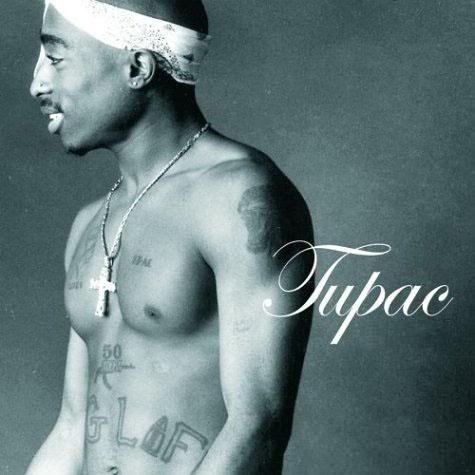
Tupac Shakur, a gangster MC and actor, is a very accessible man in terms of all the information available on him and his controversial life (and death). I looked him up in order to find some ethos, credibility, for the paper that I am writing about his song, "Changes," as it relates to hip hop and the argument presented in its lyrics. The process of looking for information about him was a little tough. Although there was plenty of it, not all of them are credible themselves and cannot be trusted. The first thing I did was use the popular search engine, Google. A variety of sources came up as I typed in his name, including blogs about Tupac's suspicious death over ten years ago, YouTube links to some of his videos, fan sites, and bibliographies. It was actually a pretty disappointing search for the most part. Because of the circumstances of his murder, almost every source had to do with the "conspiracies" and theories circling his death. There were only a few decent search results, one of them being Wikipedia. This web site, even though its a compilation of information by different users instead of actual specialized people in that field, is trustworthy overall. It went over almost every aspect of his life. The reason I trust this source is because, in the section where it talks about his death, instead of only talking about how Tupac must be alive and in hiding, and pointing to all the supposed evidence for this theory, it also talks about the fact that he actually is dead and about all the controversy over who did it. When I went to Tupac's official web site in hopes for some more information, all that it contained was an "intro" that was only a voice recording of famous quotes said by Shakur himself throught his life. The real challenge for me now is looking up some other credible sources. Wish me luck!
Friday, February 15, 2008
The Meanings of Social Life: A Cultural Sociology

I went to the library and read the first couple of paragraphs of, "The Meanings of Social Life," by Jeffrey C. Alexander. It is quite an interesting piece of literature. It talks about unconscious cultural structures and how to understand them. Alexander argues that, once these deep patterns of meaning are exposed, then and only then will we comprehend the strength of power and degradation. I think it would be an interesting read because it would give me a little insight into why humans act the way we do and it will give me a new outlook on culture and the social world.
Jeffrey C. Alexander is the Lillian Chavenson Saden Professor of Sociology at Yale University. He is also Co-Director of the Center for Cultural Sociology (CCS). His are of work deals with theory, culture, and politics. He has a great appeal to ethos because of all of his credentials and knowledge, and he is a great candidate to write this book. I would feel a complete sense of trust while reading it, knowing that this is what he studies and is teaching in a university. Overall, I think that this book is something worth reading if you are the intellectual type and Alexander proves his credibility as the author.
Saturday, February 9, 2008
Dizzee Rascal

Hip hop and all of its elements are not limited to just the United States. Moreover, it is not only limited to African Americans or blacks. Several parts of the world has its own version of what it interprets as hip hop. They have similarities and can be immediately tied together in the same genre. Hip hop, or more specifically rap, is a worldwide concept and an example I'd like to bring up is an English MC/rapper and producer. His latest single I'm aware of is titled "Flex" and it was released November 19, 2007. The video and the content of the lyrics is just about the same as America's. It is basically talking about dancing in a club and its set to an extremely catchy beat that would make anyone bop along to the lyrics. The video is mostly set in a club type scene with attractive and slim females dancing behind and next to Dizzee Rascal himself. Compared to the videos and songs of America's rap artists, they are pretty similar. Also, the overall beat is how many American rap songs are: fast and catchy. However, there are some major differences. For instance, there is no demoralization of women in Dizzee's song. Nor is there any violence, money, or drugs mentioned and/or glorified. Don't get me wrong, Dizzee Rascal has penty of other songs that DO have those things in them, i.e."I Luv You," but calling women names, and glorifying drugs and violence seems to be a standard for rap songs nowadays in America. Back to the similarities though, Dizzee's hand movements and all the settings, including the one with him leaning against the car and in the club, is so typical rap style. Dizzee Rascal himself, born Dylan Mills, started out with a troubled childhood. He partook in several illegal activities and got kicked out of four secondary schools. Several Americans rappers also stem from troubled backgrounds. Overall, the similarites are endless and even though there are also several differences, they are one and the same.
Thursday, February 7, 2008
Peer Review: Behind the Scenes
This past Monday, we peer reviewed each other's first essay of the semester. We all got into groups of about three and were handed copies of all the papers of that group. In my particular group, I had two great students and I fully enjoyed going over their papers. I got so much out of it. In reading them, I could not help but compare theirs to my own. It was like a reflex. I realized that they both had elements that my paper lacked and also elements that I had while theirs did not. After reading them, I had some spare time before class ended so I reread mine and noticed so many improvements that I could make on my final draft immediately. After all three of us finished reading and marking the papers, we had a short discussion. We all stated some weaknesses as well as some strengths and the comments were all constructive. The only thing I would change about my peer review session was the amount of time allotted to do all of it and also the questions asked on the handout. It felt like a little more would have been accomplished if we had more time and the handout's questions did not really help. If anything, they made me more confused. Overall, it was a great and valuable experience.