Transmissions From Camp Trans
1. The claim is that the camp is a non-judgmental place in which gays can come and enjoy themelseves withouth worrying.
2. The style is Rogerian.
Dark Webs Goth Subcultured in Cyberspace
1. The claim is that goths are really normal people as opposed to the stereotype that they are wierd.
2. The style is Classical.
The Truck Stop as Community and Culture
1. The claim is that truckers are not all unfriendly and they lead normal lives too.
2. The style is Toulmin.
House for the Homeless
1. The claim is that there are a variety of homeless people and that most of them anticipate getting over that part of their lives and moving on.
2. The style is Toulmin.
So far, in regards to my paper, I've done some research. Library visits have gotten me some valuable information about my topic of body modifiers. Since there are so many types of body modifiers, I chose to just stick with tattoos and piercings. Those are the more common and easily accessable in terms of people who have them. I also visited a tattoo parlor (they also perform piercings) and observed. I was able to fit in a quick interview with a patron that was in the waiting room of the parlor. I still have to narrow down EXACTLY what I'm going to try and claim in my paper. I'm getting there though and by the end of this weekend, I'll have the five page draft complete. On Monday, I intend to ask my peer review group if my claim is a valid one and if they can see a good amount of support so far.
Thursday, April 3, 2008
Sunday, March 30, 2008
My trip to the tattoo parlor...

Friday, March 28, I visited the tattoo parlor that my classmate, Leah, got her piercing from. She referred me to this place called Alien Touch Tattoo. It's walking distance from campus so I visited it after class. Here are some of my observations:
*What is going on in the field site?
As I walked in, the first thing I noticed were the walls. Pictures of the tattoo artist's previous work were all over the walls, almost acting as a wallpaper. Some of the drawings were also pre-drawn out designs, like zodiac signs, etc., for customers to choose from. There were small seating arrangements for patrons and even magazines to read. Of course, they all related to piercings, tattoos, and things of that nature. People were waiting for their turn to enter the adjacent room where the actual piercing/tattooing goes on. The door to that room is always closed unless someone is going in or coming out.
*How do the members of the subculture interact with each other?
People in the waiting room were mingling. A lot of them were sharing previous artwork and future artwork ideas. The one or two whose first times it was sat quietly with their friend or family member that they came with and looked very nervous.
*Make a list of terminology used at the fieldsite with which you might be unfamiliar.
Some alternative words for tattoo are ink, tat, or even tac. Some for the actual act of tattooing are "carving" and "pounding skin". An "iron" is the tattoo machine they use to tattoo someone. They call all the needles and tubes "works." An "autoclave" is a medical sterilization device that uses high pressure steam to sterilize all the tools and equipment used to pierce. A "clamp" is basically what it sounds like. It's a medical clamp that is used to hold the skin during the piercing for accurateness.
*What details, behaviors, surroundings did you have questions about?
I wondered what the actual process of making a customer's sketch into a real tattoo was. Also, whats the best type of metal to have as your first piercing?
*Find at least one person at your fieldsite you can speak to and ask them a question about something you observed that you didn't understand.
I questioned a twenty-one year old man by the name of Rashad Thompson. He was there to get his fourth tattoo. He started when he was seventeen years old. He had an ambigram of exactly what he wanted to get that day. It was the word "Faith" in pretty, fancy, exaggerated font. I asked him if he could tell me how the tattoo artist was going to turn his ambigram into a tattoo. He said that he also brought in an outline and the artist was going to copy the outline onto a special paper. Then, he would press that special paper onto his arm and the paper has a special ink on it that will leave the outline of the design on his arm. Finally, the artist will draw over it and fill it in accordingly. He estimated that the entire process will take about an hour.
Sunday, March 23, 2008
Prison Performing Arts Program

1. What makes this fieldsite a good fieldsite for this research?
The fieldsite is great because prison is the center of the actual subculture so every observation is a direct one.
2. What observations does the author make that are particularly useful in talking about this subculture?
The prisoners have a deep emotional connection to their character and the play. Being people that have had to contemplate doing a violents crime, then going through it, as well as facing the consequences, affected their interpretion of their roles.
3. What are the norms and values subculture?
They normally went over their lines whenever they got the chance and they truly valued the two or so hours they spent with the performing arts coach because they felt like humans and like they were doing somethin good.
4. What interview technique does the author use that works well with this subculture?
He was careful not to ask anything too offending or too personal. He was very polite with the prisoners and asked them several though provoking questions. He seemed very dedicated.
Thursday, March 13, 2008
Final Paper!!
Subculture:
Body modifiers (piercing and tattoos)
Sources:
Baumann, Leslie. Cosmetic Dermatology: Principles and Practice. McGraw-Hill Professional, 2002. 14 Mar. 2008
Featherstone, Mike. Body Modification. Sage Publications Inc, 2000. 14 Mar. 2008
Greif, Judith, Walter Hewitt, and Myrna L. Armstrong. "Tattooing and Body Piercing: Body Art Practices Among College Students." Sage Journals Online 8 (2009). 14 Mar.
2008
Pitts, Victoria. In the Flesh: the Cultural Politics of Body Modification. Palgrave Macmillan, 2003. 14 Mar. 2008
Sanders, Clinton. Customizing the Body: the Art and Culture of Tattooing. Temple UP, 1989. 14 Mar. 2008
Reflection:
Reading a couple of paragraphs from "Cosmetic Dermatology: Principles and Practice" got me really interested in writing about the subculture of body modifiers. I knew I had to narrow the topic down in order to write an efficient paper about it so, as I continued to read, I decided that I wanted to specifically write about why people tattoo and pierce themselves, the psychological reasoning behind it.
Then, I checked out the sources that the author used and looked up some of them. That lead to more sources for myself and now I think I am ready to begin the research and writing process.
Thursday, February 28, 2008
Seppuku
In my English class, we were asked to underline any words, phrases, or names that we could not write a three pager paper on(at least without any help) from the article "Hey Little Girl is your Daddy Home" by Elizabeth Wurtzel. Then after selecting a few, we wrote them on the board and we all, independently, chose one to do research on. The word I chose was hari-kari. I though it looked interesting. So here we go on my journey to find the meaning of the word. Kari-kari, only called that by foreigners, and wrongly (Oxford Illustrated), is a Japanese suicide ritual. It is the Japanese vulgar term for it. It deals with voluntarily or obligatory disemboweling oneself and it is done with the help of a sharp knife (Benet's Reader's). The correct term is harakiri but the Japanese themselves actually call it seppuku. This is because they think of it as more elegant since it is derived from the Chinese. This form of suicide occurred mostly within the samurai (military) class in Japan during the Middle Ages. It was done as an alternative to being captured or being disgraced in war and was considered extremely honorable and respectable. In some cases, some samurai were given the option to partake in seppuku as opposed to "public execution of the death penalty (Oxford Illustrated)." Hurst explains that the ritual dates back to the late Heian period in history. It was done because torture was so common once captured by the enemy in war and suicide before being captured was much preferred (section Shinigurui, Crazy for Death).
Unfortunately, seppuku is not a very written-about topic and I was not able to gather information from five sources. Every source that even mentioned any of the names of this suicide, as there are several, only defined it and gave a tiny section of background information and it all seemed to be repetitive. Hopefully, through time, I'll be able to discover key words that are associated with seppuku in order to search with and find more information. Until then, I hope this suffices!
Thursday, February 21, 2008
Tupac: All Eyes on HIM
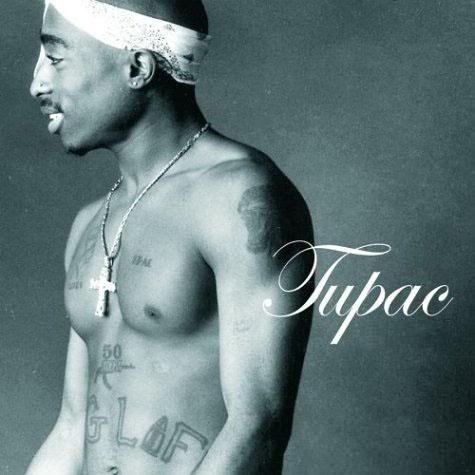
Tupac Shakur, a gangster MC and actor, is a very accessible man in terms of all the information available on him and his controversial life (and death). I looked him up in order to find some ethos, credibility, for the paper that I am writing about his song, "Changes," as it relates to hip hop and the argument presented in its lyrics. The process of looking for information about him was a little tough. Although there was plenty of it, not all of them are credible themselves and cannot be trusted. The first thing I did was use the popular search engine, Google. A variety of sources came up as I typed in his name, including blogs about Tupac's suspicious death over ten years ago, YouTube links to some of his videos, fan sites, and bibliographies. It was actually a pretty disappointing search for the most part. Because of the circumstances of his murder, almost every source had to do with the "conspiracies" and theories circling his death. There were only a few decent search results, one of them being Wikipedia. This web site, even though its a compilation of information by different users instead of actual specialized people in that field, is trustworthy overall. It went over almost every aspect of his life. The reason I trust this source is because, in the section where it talks about his death, instead of only talking about how Tupac must be alive and in hiding, and pointing to all the supposed evidence for this theory, it also talks about the fact that he actually is dead and about all the controversy over who did it. When I went to Tupac's official web site in hopes for some more information, all that it contained was an "intro" that was only a voice recording of famous quotes said by Shakur himself throught his life. The real challenge for me now is looking up some other credible sources. Wish me luck!
Friday, February 15, 2008
The Meanings of Social Life: A Cultural Sociology

I went to the library and read the first couple of paragraphs of, "The Meanings of Social Life," by Jeffrey C. Alexander. It is quite an interesting piece of literature. It talks about unconscious cultural structures and how to understand them. Alexander argues that, once these deep patterns of meaning are exposed, then and only then will we comprehend the strength of power and degradation. I think it would be an interesting read because it would give me a little insight into why humans act the way we do and it will give me a new outlook on culture and the social world.
Jeffrey C. Alexander is the Lillian Chavenson Saden Professor of Sociology at Yale University. He is also Co-Director of the Center for Cultural Sociology (CCS). His are of work deals with theory, culture, and politics. He has a great appeal to ethos because of all of his credentials and knowledge, and he is a great candidate to write this book. I would feel a complete sense of trust while reading it, knowing that this is what he studies and is teaching in a university. Overall, I think that this book is something worth reading if you are the intellectual type and Alexander proves his credibility as the author.
Saturday, February 9, 2008
Dizzee Rascal

Hip hop and all of its elements are not limited to just the United States. Moreover, it is not only limited to African Americans or blacks. Several parts of the world has its own version of what it interprets as hip hop. They have similarities and can be immediately tied together in the same genre. Hip hop, or more specifically rap, is a worldwide concept and an example I'd like to bring up is an English MC/rapper and producer. His latest single I'm aware of is titled "Flex" and it was released November 19, 2007. The video and the content of the lyrics is just about the same as America's. It is basically talking about dancing in a club and its set to an extremely catchy beat that would make anyone bop along to the lyrics. The video is mostly set in a club type scene with attractive and slim females dancing behind and next to Dizzee Rascal himself. Compared to the videos and songs of America's rap artists, they are pretty similar. Also, the overall beat is how many American rap songs are: fast and catchy. However, there are some major differences. For instance, there is no demoralization of women in Dizzee's song. Nor is there any violence, money, or drugs mentioned and/or glorified. Don't get me wrong, Dizzee Rascal has penty of other songs that DO have those things in them, i.e."I Luv You," but calling women names, and glorifying drugs and violence seems to be a standard for rap songs nowadays in America. Back to the similarities though, Dizzee's hand movements and all the settings, including the one with him leaning against the car and in the club, is so typical rap style. Dizzee Rascal himself, born Dylan Mills, started out with a troubled childhood. He partook in several illegal activities and got kicked out of four secondary schools. Several Americans rappers also stem from troubled backgrounds. Overall, the similarites are endless and even though there are also several differences, they are one and the same.
Thursday, February 7, 2008
Peer Review: Behind the Scenes
This past Monday, we peer reviewed each other's first essay of the semester. We all got into groups of about three and were handed copies of all the papers of that group. In my particular group, I had two great students and I fully enjoyed going over their papers. I got so much out of it. In reading them, I could not help but compare theirs to my own. It was like a reflex. I realized that they both had elements that my paper lacked and also elements that I had while theirs did not. After reading them, I had some spare time before class ended so I reread mine and noticed so many improvements that I could make on my final draft immediately. After all three of us finished reading and marking the papers, we had a short discussion. We all stated some weaknesses as well as some strengths and the comments were all constructive. The only thing I would change about my peer review session was the amount of time allotted to do all of it and also the questions asked on the handout. It felt like a little more would have been accomplished if we had more time and the handout's questions did not really help. If anything, they made me more confused. Overall, it was a great and valuable experience.
Tuesday, January 29, 2008
Droz and his faulty reasoing...

In the movie, PCU, an "appeal to ridicule" logical fallacy that can be found in the quote from Droz, "What's this? You're wearing the shirt of the band you're going to see? Don't be that guy." By mocking someone who wears any attire of the a group whose concert they are going to, he is saying that it is stupid and wrong to do that. This sort of reasoning is not valid because mocking a claim does not show that it is false.
Sunday, January 27, 2008
Death of an Innocent ♥

On a smaller scale, this is exactly how college students' mindsets are. It is a well-known and widely accepted fact that teenagers, even those in middle school and high school, want a sense of freedom. They want as little parentl advisement as possible and think that they can handle anything that comes their way on their way without any help. As wrong as this mindset is, it still continues to affect teenagers all across the country, quite possibly even the world. McCandless was just a stubborn young man that was trying to find himself by distancing himself from civilization and "becoming lost in the wild." Although his was a more extreme case, this is how young adults across college campuses in the United States want to express themselves: by being more self-reliant and without any parental forces. McCandless was so stubborn. He was "absolutely positive [that he would not] run into anything [he could not] deal with on [his] own." He ademently opposed for any sort of help from people that he encountered during his trips and he even got rid of his watch, map, and went as far as to burn all of the money he had on him, around one hundred sixty dollars worth. Young people these days also act the same way, on a lesser scale. They do not want any help and they think that everything is possible to do on their own. They are so stubborn that they become blind, based on passion, and unconvincable, much like McCandless was. They are "rash and incautious to the point of foolhardiness." Young, restless, and void of much common sense. Chris McCandless is the epitome of young people these days, to an extreme of course. This stubborness and dedication is what accounts for the success of youngsters growing into responsible adults through experiences and lessons learned. Unfortunately, for twenty four year old Christopher McCandless, it ended with his premature death...the death of an innocent.
Tuesday, January 22, 2008
Manipulation or Reaching Out?
